
An internal linking strategy for service business websites helps Google understand your most important pages and helps visitors move from useful content to relevant services, quote forms, booking pages, and contact options.
Internal links are not only an SEO tactic.
They are part of the customer journey.
A strong internal linking strategy helps service businesses:
- Improve crawlability
- Strengthen service pages
- Build topical authority
- Reduce orphan pages
- Support local SEO
- Guide users to relevant solutions
- Improve website navigation
- Reduce confusion
- Increase service-page visits
- Improve lead generation
- Connect blogs to money pages
- Help Google understand page relationships
- Support AI search visibility
- Improve conversion paths
A weak internal linking strategy creates problems.
Important pages may not get enough internal authority.
Blog posts may bring traffic but never send visitors to service pages.
Users may read helpful content and leave without contacting the business.
Google may rank the wrong page or struggle to understand which service page matters most.
As an SEO expert and website developer, I always treat internal linking as both a ranking system and a lead-generation system.
At Nexora Creation, I do not add internal links randomly. I use them to connect search intent, service relevance, user problems, and business goals.
In this guide, I will explain how service businesses can build an internal linking strategy that helps Google understand the website and helps visitors become leads.
What is internal linking in SEO?
Internal linking means linking one page on your website to another page on the same website.
Examples include:
- A blog linking to a service page
- A service page linking to a related blog
- A homepage linking to main services
- A location page linking to a service page
- A case study linking to a service page
- A blog post linking to another related blog
- A footer linking to important pages
- A navigation menu linking to core pages
For example:
A blog about “Technical SEO Issues That Cause Ranking Loss” can link to:
- SEO Services
- Website Development Services
- Contact Us
A blog about “Why Your Website Is Not Generating Leads” can link to:
- Website Development Services
- SEO Services
- CRM Automation Services
- AI Chatbot Services
These links help users find the next useful page.
They also help Google understand how your website is organized.
Why does internal linking matter for service businesses?
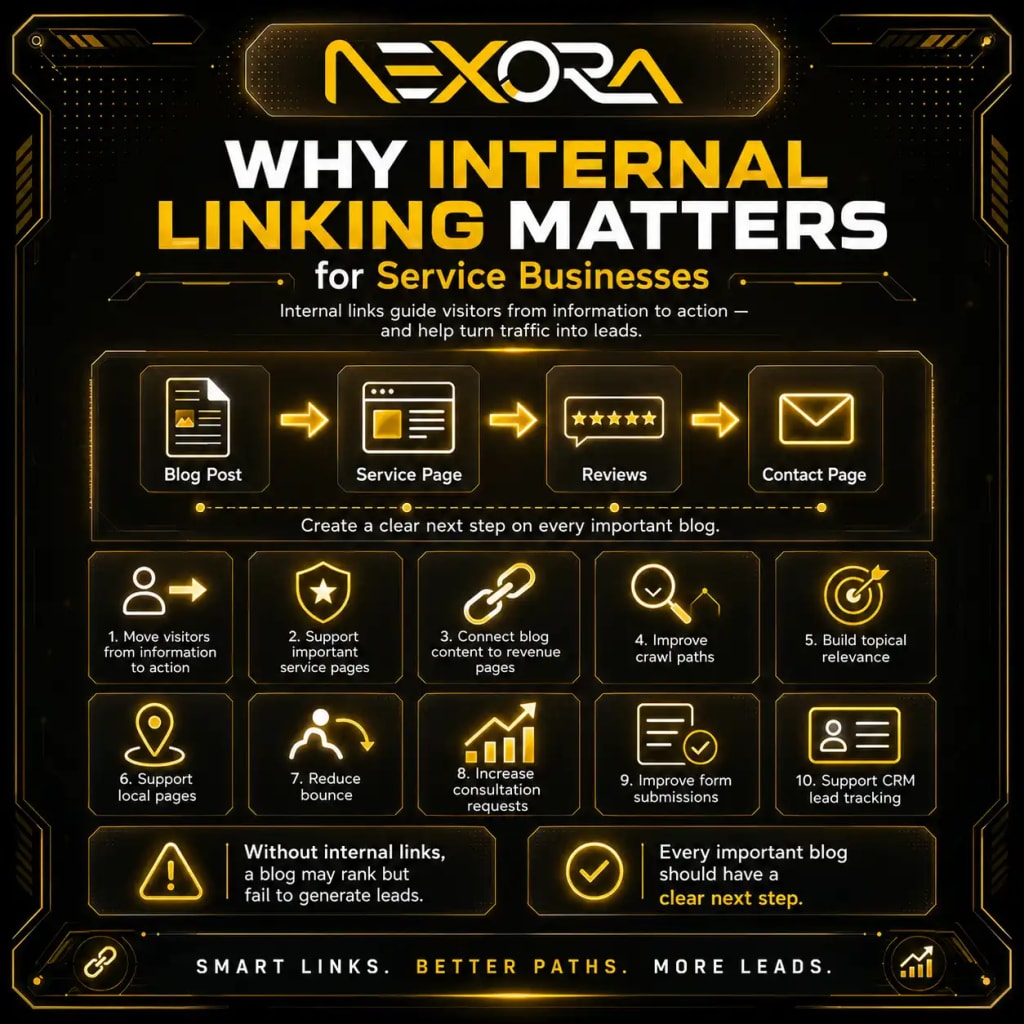
Internal linking matters for service businesses because most service leads do not come from one page alone.
A visitor may start on a blog.
Then they may read a service page.
Then they may check reviews.
Then they may visit the contact page.
Internal links create that path.
For service businesses, internal linking helps:
- Move visitors from information to action
- Support important service pages
- Connect blog content to revenue pages
- Improve crawl paths
- Build topical relevance
- Explain services clearly
- Support local pages
- Improve user experience
- Reduce bounce
- Increase consultation requests
- Improve form submissions
- Support CRM lead tracking
Without internal links, a blog may rank but fail to generate leads.
That is why every important blog should have a clear next step.
How do internal links help Google understand your website?
Internal links help Google discover pages and understand relationships between them.
They tell Google:
- Which pages are important
- Which pages are related
- Which services matter most
- Which blogs support which services
- Which page should rank for a topic
- Which page is the main service page
- Which content belongs in the same topic cluster
- Which pages are deeper supporting resources
Google reads internal links with context.
That context includes:
- Anchor text
- Surrounding paragraph
- Page topic
- Link placement
- Site hierarchy
- Navigation structure
- Related content
- URL structure
For example, if ten blogs about SEO recovery, lost keywords, content decay, and technical SEO all link naturally to your SEO Services page, that sends a strong topical signal.
It tells Google:
“This SEO service page is the main page for this topic.”
Internal links help Google connect the dots.
How do internal links help users become leads?
Internal links help users become leads by giving them a clear next step when they are ready to act.
A service business website should not make users search for the next page.
The next step should appear naturally inside the content.
For example:
A visitor reading about falling rankings may need:
- SEO audit
- Technical SEO support
- Content refresh
- Internal linking improvement
- Contact page
A visitor reading about missed leads may need:
- CRM automation
- Lead tracking
- AI chatbot
- Website conversion fix
A visitor reading about website design may need:
- Website development
- Landing page design
- UI/UX improvement
- Contact form optimization
Internal links reduce friction.
They help visitors move from:
- Problem
- Understanding
- Solution
- Service page
- Contact
- Lead
That is why internal links should support both SEO and conversion.
What pages should service businesses link to most often?
Service businesses should link most often to pages that support revenue, trust, and user decisions.
Important pages include:
- Homepage
- Main services page
- Individual service pages
- Contact page
- Location pages
- Industry pages
- Case studies
- Testimonials
- Portfolio
- High-intent blog posts
- Booking page
- Quote request page
- FAQ page
- Pricing page, if useful
For Nexora Creation, important internal link targets include:
- SEO Services
- Website Development Services
- CRM Automation Services
- AI Voice Agent and Chatbot Services
- Contact Us
These pages should receive links from related blog posts and supporting pages.
A service page without internal links is harder to support.
A blog without links to service pages is less useful for lead generation.
How should blogs link to service pages?
Blogs should link to service pages when the reader needs a solution connected to the topic.
Do not force service links in every paragraph.
Place them where the problem naturally leads to the service.
Examples:
If a blog explains ranking drops, link to SEO Services.
If a blog explains poor website structure, link to Website Development Services.
If a blog explains leads getting lost after form submission, link to CRM Automation Services.
If a blog explains after-hours questions or missed calls, link to AI Voice Agent and Chatbot Services.
AI Voice Agent & Chatbot Services
The link should feel helpful.
The reader should think:
“This is the next thing I need.”
How should service pages link to blogs?
Service pages should link to supporting blogs when users need more education before contacting you.
For example, an SEO Services page can link to blogs like:
- Lost Keywords in Google Search Console
- Content Decay SEO
- SEO Recovery Checklist
- Technical SEO Issues That Cause Ranking Loss
- How to Compare GSC Data During an SEO Drop
- SEO Website Structure
This helps users learn more.
It also helps Google understand that your SEO service page is supported by deep educational content.
A Website Development page can link to blogs like:
- Website Not Generating Leads
- Landing Page vs Website for Google Ads
- SEO Website Structure
- Google Ads Landing Page Experience
- Service Page Structure
A CRM Automation page can link to blogs like:
- Content Not Generating Leads
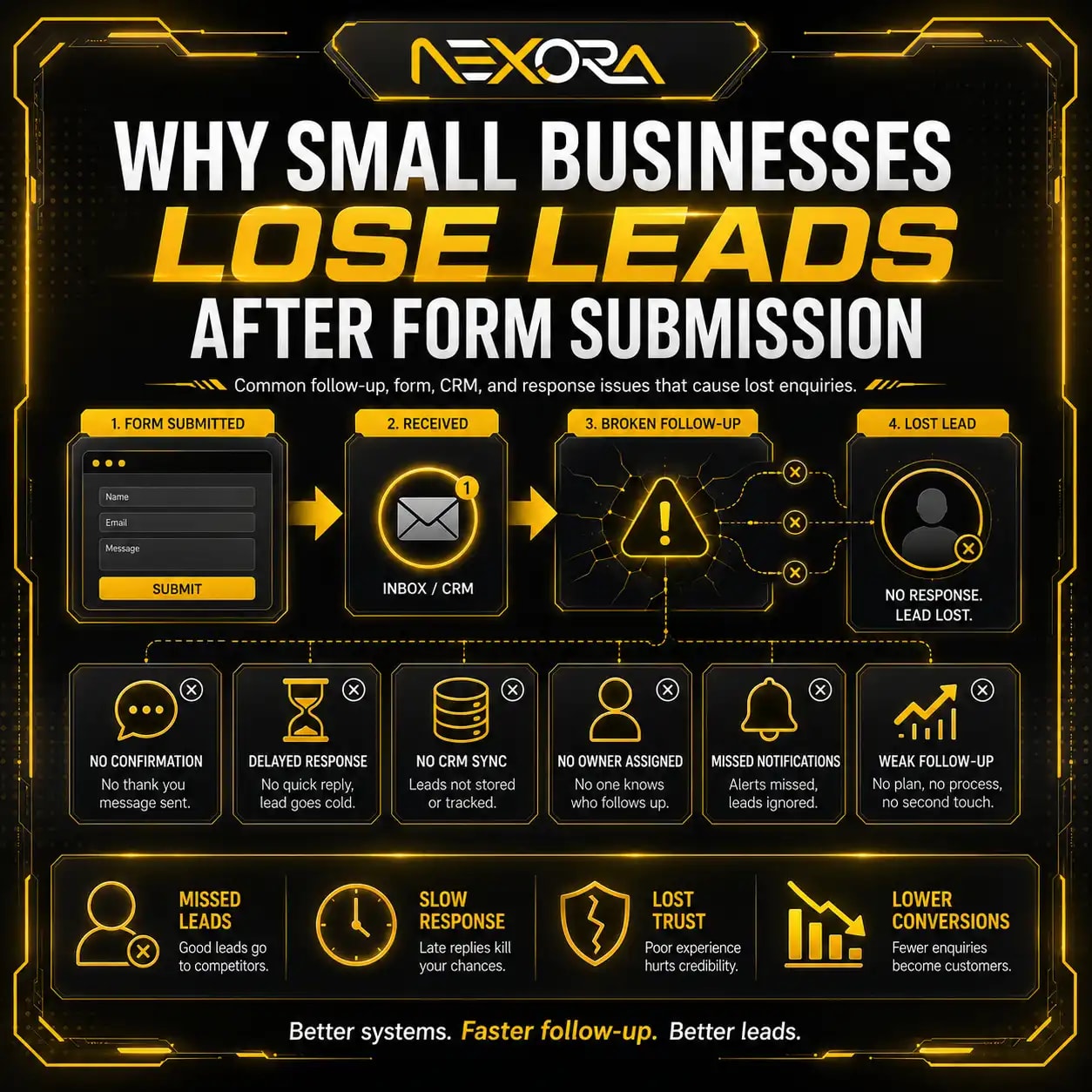
- Why Leads Get Lost After Form Submission
- Online Booking for Service Businesses
- How CRM Automation Helps Follow-Up
This creates a stronger topic cluster.
What is a topic cluster internal linking strategy?
A topic cluster internal linking strategy connects a main service or pillar page with supporting content.
It usually includes:
- One main service page
- Several supporting blogs
- Internal links from blogs to service page
- Internal links from service page to key blogs
- Links between related blogs
- Clear anchor text
- Related CTAs
- FAQs
- Topic consistency
Example SEO topic cluster:
- SEO Services
- Lost Keywords in Google Search Console
- Content Decay SEO
- Technical SEO Issues
- SEO Recovery Checklist
- GSC Data Comparison
- SEO Website Structure
- Internal Linking Strategy
Each supporting blog should link back to the SEO Services page where relevant.
The SEO Services page should also link to the best supporting guides.
This helps build topical authority.
It also creates a clear user journey.
How should you choose anchor text for internal links?
Anchor text is the clickable text used for a link.
Good anchor text should be clear, natural, and descriptive.
Examples of good anchor text:
- SEO Services
- technical SEO audit
- website development services
- CRM automation setup
- AI chatbot lead capture
- content decay audit
- internal linking strategy
- landing page development
- website conversion review
- local SEO services
Weak anchor text includes:
- Click here
- Read more
- Learn more
- This page
- Go here
- More info
Exact-match anchor text can be useful sometimes, but overusing it looks unnatural.
Use a mix of:
- Service name anchors
- Problem-based anchors
- Solution-based anchors
- Natural phrase anchors
- Branded anchors
- CTA anchors
Examples:
- “our SEO Services”
- “technical SEO recovery plan”
- “website development support”
- “CRM automation for lead follow-up”
- “AI chatbot setup for after-hours leads”
Anchor text should help users understand what they will get after clicking.
Where should internal links be placed on a page?
Internal links should appear where they are most useful for the reader.
Useful placements include:
- Introduction, if relevant
- Problem sections
- Solution sections
- Checklist sections
- CTA blocks
- Related resources section
- FAQ answers
- Conclusion
- Sidebar
- Footer
- Navigation
- Related posts section
For lead-generation blogs, the best internal link placements are usually:
- After explaining a problem
- After diagnosing a cause
- After giving a solution
- Before the conclusion
- Inside a soft CTA
Example:
“If your rankings dropped after a redesign, the issue may be technical SEO, redirects, or website structure. Nexora Creation can help review the problem through SEO Services and Website Development Services.”
This link placement makes sense because the user has a problem and needs the next step.
How many internal links should a service business page have?
There is no perfect number.
The right number depends on page length, page type, and user intent.
A service page may include:
- 4 to 8 internal links
A long blog may include:
- 8 to 15 internal links
A pillar page may include:
- 15 to 25 internal links
A short location page may include:
- 3 to 6 internal links
Quality matters more than quantity.
Do not add links just to hit a number.
Every internal link should answer:
- Does this help the user?
- Does this support the page topic?
- Does this connect to a relevant service?
- Does this improve SEO structure?
- Does this guide the visitor forward?
If the link does not help, remove it.
How should internal links support local SEO?
Internal links can help local SEO by connecting location pages, service pages, and local blog content.
For a local service business, link between:
- Main service page
- Local service pages
- City pages
- Neighborhood pages
- Google Business Profile landing page
- Local blog posts
- Case studies from service areas
- Contact page
- Reviews page
Example structure:
- Main page: HVAC SEO Services
- Location page: HVAC SEO in Houston
- Blog: Service Pages Every HVAC Contractor Should Have
- Blog: How HVAC Companies Rank for AC Repair Near Me
- Contact page
Local internal links help Google understand:
- What service you offer
- Where you offer it
- Which pages support local intent
- Which locations matter
- Which services connect to which areas
Do not create location pages without internal links.
A location page that no one can find inside the website is weak.
How should internal links support Google Ads landing pages?
Google Ads landing pages are usually built for conversions, not broad navigation.
But internal linking still matters carefully.
For paid landing pages, avoid distracting users with too many links.
However, you may still need links to:
- Privacy policy
- Terms
- Contact page
- Main service page
- Case study, if useful
- Trust proof
- Booking page
The goal is to keep the landing page focused.
A Google Ads landing page should not send users to ten different blog posts.
But SEO blogs can link to landing page strategy pages or website development services when explaining post-click conversion problems.
Example:
A blog about Google Ads clicks not converting can link to:
- Website Development Services
- Landing page development
- CRM Automation
- Contact Us
Internal links should match the page type.
Service pages and blogs can include more helpful internal links.
Paid landing pages should stay focused.
How should internal links support CRM and lead tracking?
Internal links can guide users to lead capture pages, but CRM helps track what happens after the click.
For service businesses, internal links should support measurable actions.
Track links that lead to:
- Contact forms
- Quote request pages
- Booking pages
- Service pages
- Chatbot starts
- Consultation pages
- Phone clicks
- Lead magnets
- Pricing request pages
A CRM can help track:
- Which page the lead came from
- Which service the lead wanted
- Which blog assisted the lead
- Which CTA was clicked
- Which form was submitted
- Which lead became a customer
- Which content supports revenue
If internal links send users to service pages but you cannot track leads, you may miss valuable data.
Nexora Creation can help connect website forms, internal CTA paths, chatbot leads, and CRM automation so you can see which content drives real enquiries.
How can AI chatbots use internal linking logic?
AI chatbots can guide users like smart internal links.
Instead of only showing static links, a chatbot can ask questions and route visitors to the right page.
For example, a chatbot can ask:
- Are you looking for SEO help?
- Do you need a new website?
- Are you losing leads?
- Do you need CRM automation?
- Do you want AI chatbot support?
- Are your rankings dropping?
- Are your website visitors not converting?
Then it can guide users to:
- SEO Services
- Website Development Services
- CRM Automation Services
- AI Chatbot Services
- Contact page
This helps users who are not sure where to go.
AI chatbots can also capture:
- Name
- Phone
- Website URL
- Service interest
- Main problem
- Preferred contact time
For service businesses, this creates a stronger path from content to lead.
AI Voice Agent & Chatbot Services
How should internal links help AI search understand your site?
AI search systems need clear structure and topic relationships.
Internal links help AI systems understand:
- Which pages are main service pages
- Which blogs support those services
- Which topics belong together
- Which pages answer specific questions
- Which content is authoritative
- Which pages show business expertise
- Which next step users should take
To support AI search, use:
- Question-based headings
- Descriptive internal links
- Clear service pages
- Topic clusters
- FAQ sections
- Short direct answers
- Consistent terminology
- Branded mentions
- Schema-ready structure
- Helpful examples
For example, if many SEO-related blogs naturally link to SEO Services, AI systems can better understand that Nexora Creation has deep content around SEO strategy, ranking recovery, technical SEO, and website visibility.
Internal links make relationships visible.
What is the best internal linking strategy for service pages?
The best internal linking strategy for service pages is to connect them with supporting content, related services, and conversion paths.
A service page should link to:
- Related services
- Supporting blogs
- Case studies
- FAQs
- Contact page
- Booking page
- Pricing page, if useful
- Industry pages
- Location pages
- Portfolio examples
For example, an SEO Services page can link to:
- Technical SEO Issues That Cause Ranking Loss
- Content Decay SEO
- Lost Keywords in Google Search Console
- SEO Recovery Checklist
- Website Development Services
- Contact Us
A Website Development page can link to:
- SEO Website Structure
- Website Not Generating Leads
- Landing Page vs Website
- CRM Automation Services
- Contact Us
Service pages should not be dead ends.
They should give users enough options to continue.
What is the best internal linking strategy for blogs?
The best internal linking strategy for blogs is to connect each blog to a relevant service page and related supporting content.
A blog should usually include links to:
- Main service page
- Related blog posts
- Supporting service page
- Contact page, near the end
- Lead capture page, if useful
For example, a blog about internal linking should link to:
- SEO Services
- Website Development Services
- CRM Automation Services
- AI Chatbot Services
- Contact Us
But the links should appear naturally.
Do not add all links in one paragraph without context.
Connect each link to the section topic.
What is the best internal linking strategy for location pages?
Location pages should link to main services and nearby useful pages.
A location page can link to:
- Main service page
- Related service pages
- Nearby location pages
- Local case studies
- Local blog posts
- Contact page
- Reviews
- Booking page
Example:
A page about SEO Services in Tampa can link to:
- Main SEO Services page
- Website Development Services
- Local SEO blog posts
- Tampa case study
- Contact page
Location pages should also receive links from:
- Main service pages
- Blog posts
- Footer service area list
- Location hub
- Related nearby pages
Do not create isolated location pages.
They need internal support.
How do you audit internal links on a service business website?
An internal link audit helps you find missed opportunities and weak pages.
Check:
- Which pages receive the most internal links
- Which pages receive the fewest links
- Which important pages are orphaned
- Which blogs do not link to services
- Which service pages lack supporting links
- Which anchor texts are vague
- Which links are broken
- Which pages link to irrelevant pages
- Which old content needs updated links
- Which new services need more support
- Which location pages are isolated
- Which contact paths are weak
Use tools like:
- Google Search Console Links report
- Screaming Frog
- Sitebulb
- Ahrefs
- Semrush
- WordPress internal link plugins
- Manual content review
But tools only show links.
Strategy decides which links should exist.
How do you find orphan pages?
Orphan pages are pages with no internal links pointing to them.
They are common on service business websites.
Orphan pages may include:
- Old blogs
- Service subpages
- Landing pages
- Location pages
- Case studies
- Portfolio pages
- Campaign pages
- Thank-you pages
- Test pages
Find orphan pages by comparing:
- XML sitemap
- Crawled URLs
- Google indexed URLs
- Analytics landing pages
- CMS page list
- Internal crawl data
If a page matters, link to it.
If it does not matter, consider:
- Updating it
- Merging it
- Redirecting it
- Removing it from index, if appropriate
Important pages should never be orphaned.
How do you fix weak internal linking?
Fix weak internal linking by creating a clear map between pages.
Start with your most important service pages.
For each service page, list:
- Supporting blogs
- Related services
- Relevant location pages
- Case studies
- FAQs
- Contact path
Then add contextual links from relevant pages.
Example workflow:
- Identify main services.
- Identify supporting blogs.
- Add links from blogs to services.
- Add links from services to best blogs.
- Link related blogs together.
- Link location pages to main services.
- Link case studies to services.
- Add contact links near conversion sections.
- Fix broken links.
- Update vague anchor text.
- Remove irrelevant links.
Do this page by page.
Internal linking should feel natural and helpful.
How do you avoid over-optimization in internal links?
Over-optimization happens when internal links look unnatural or repetitive.
Avoid:
- Using the exact same anchor text everywhere
- Linking every keyword mention
- Adding too many links in one paragraph
- Linking irrelevant pages
- Stuffing service links into every section
- Using aggressive anchors
- Linking only to money pages
- Ignoring user experience
- Creating sitewide keyword-heavy footer links
- Adding links that do not help the reader
Use natural variation.
Examples:
- SEO Services
- technical SEO support
- SEO recovery strategy
- Google Search Console audit
- ranking drop analysis
- search visibility improvement
The anchor should fit the sentence.
Write for users first.
How do you measure internal linking success?
Measure internal linking success with both SEO and conversion metrics.
SEO metrics include:
- More pages crawled
- Improved impressions
- Improved rankings
- Increased clicks
- Better keyword visibility
- More long-tail rankings
- Better service-page performance
- Reduced orphan pages
- Improved crawl depth
- Better topic cluster visibility
Conversion metrics include:
- More service-page visits
- More contact page visits
- More form submissions
- More phone clicks
- More booking requests
- More chatbot leads
- Better assisted conversions
- More qualified CRM leads
- Better user paths
Internal linking should improve both discovery and action.
If rankings improve but leads do not, review the CTA path.
If users click service pages but do not convert, review the service page quality.
What internal linking mistakes should service businesses avoid?
Avoid these common mistakes:
- No links from blogs to service pages
- Too many links to homepage
- No links to contact page
- Vague anchor text
- Random internal links
- Orphan service pages
- Orphan location pages
- Broken internal links
- Overusing exact-match anchors
- Linking only for SEO
- Not linking related blogs together
- Ignoring old content
- Forgetting new service pages
- Weak footer links
- No topic clusters
- No internal links from high-authority pages
- Duplicating the same link too often
- No lead tracking
- No CRM connection
- No internal link audit
Each mistake can reduce SEO performance and lead generation.
A strong internal linking system should be intentional.
How should Nexora Creation help with internal linking strategy?
Nexora Creation helps service businesses build internal linking systems that support SEO, user experience, and lead generation.
For internal linking strategy, we can help with:
- Website structure audit
- Service-page mapping
- Blog-to-service linking
- Topic cluster planning
- SEO content strategy
- Anchor text planning
- Orphan page cleanup
- Internal link audit
- Location page linking
- Website redesign structure
- Technical SEO support
- Conversion path planning
- CTA placement
- CRM lead tracking
- AI chatbot routing
The goal is not only to add links.
The goal is to create a website journey that Google can understand and users can follow.
If your blogs bring traffic but do not send visitors to service pages, or your service pages are not ranking, internal linking may be one of the problems.
What is the best internal linking strategy for service business websites?
The best internal linking strategy for service business websites connects every important page to a clear business purpose.
A strong strategy includes:
- Homepage linking to main services
- Main services linking to supporting blogs
- Blogs linking back to relevant services
- Related blogs linking to each other
- Location pages linking to services
- Case studies linking to services
- Contact page linked from conversion sections
- Descriptive anchor text
- No orphan pages
- Clear topic clusters
- Lead-focused CTAs
- CRM tracking
- Regular internal link audits
Every internal link should answer one question:
“What is the most helpful next page for this visitor?”
If the answer is clear, the link belongs.
If the answer is unclear, the link may not be needed.
Conclusion
Internal linking strategy is one of the most important SEO systems for service business websites.
It helps Google understand your pages.
It helps users find the right service.
It helps blogs support revenue pages.
It helps service pages gain authority.
It helps location pages connect to real services.
It helps visitors move from education to action.
A strong internal linking strategy should include:
- Clear service-page links
- Blog-to-service links
- Topic clusters
- Descriptive anchor text
- Related blog links
- Location page links
- Case study links
- Contact page links
- CTA paths
- CRM tracking
- Regular audits
Do not treat internal links as random SEO decorations.
Use them as guided paths.
When internal links connect user problems to relevant services, your website becomes easier for Google to understand and easier for visitors to use.
That is how internal linking supports rankings, leads, and business growth.
FAQs
What is internal linking?
Internal linking means linking one page on your website to another page on the same website. It helps users navigate and helps search engines understand page relationships.
Why is internal linking important for service businesses?
Internal linking helps service businesses connect blogs, service pages, location pages, case studies, and contact paths so users can move from information to action.
How do internal links help SEO?
Internal links help Google discover pages, understand page importance, pass relevance signals, support topic clusters, and crawl the website more effectively.
Should blogs link to service pages?
Yes. Blogs should link to relevant service pages when the reader needs a next step connected to the problem discussed in the article.
What pages should get the most internal links?
Important service pages, contact pages, location pages, high-intent blogs, case studies, and booking pages should receive strong internal link support.
What is good anchor text for internal links?
Good anchor text is clear, descriptive, and natural. Examples include SEO Services, website development services, CRM automation setup, and AI chatbot lead capture.
How many internal links should a blog have?
A long blog may have 8 to 15 internal links if they are relevant. Quality and usefulness matter more than a fixed number.
What are orphan pages?
Orphan pages are pages with no internal links pointing to them. They are harder for users and search engines to find.
Can too many internal links hurt SEO?
Too many irrelevant or spammy internal links can hurt user experience and make the page feel over-optimized. Links should be useful and natural.
How often should I audit internal links?
Audit internal links after website redesigns, new service launches, content updates, migrations, and at least once or twice per year.
Can internal links improve lead generation?
Yes. Internal links can guide visitors from blogs to service pages, contact forms, booking pages, chatbot flows, and CRM-tracked lead paths.
What is the biggest internal linking mistake?
The biggest mistake is publishing blogs without linking them to relevant service pages. This can bring traffic but fail to generate leads.