If your content is not generating leads, the problem is usually not only the content itself.
In most cases, the real issue is weak audience targeting, unclear calls to action, poor landing pages, missing trust signals, or no follow-up system after someone shows interest.
I see this problem often as a website developer and SEO specialist. A business publishes blog posts, social media content, landing pages, or videos. The content gets views, impressions, and sometimes even clicks.
But it does not turn those visitors into:
- Enquiries
- Calls
- Bookings
- Quote requests
- Qualified leads
- Sales conversations
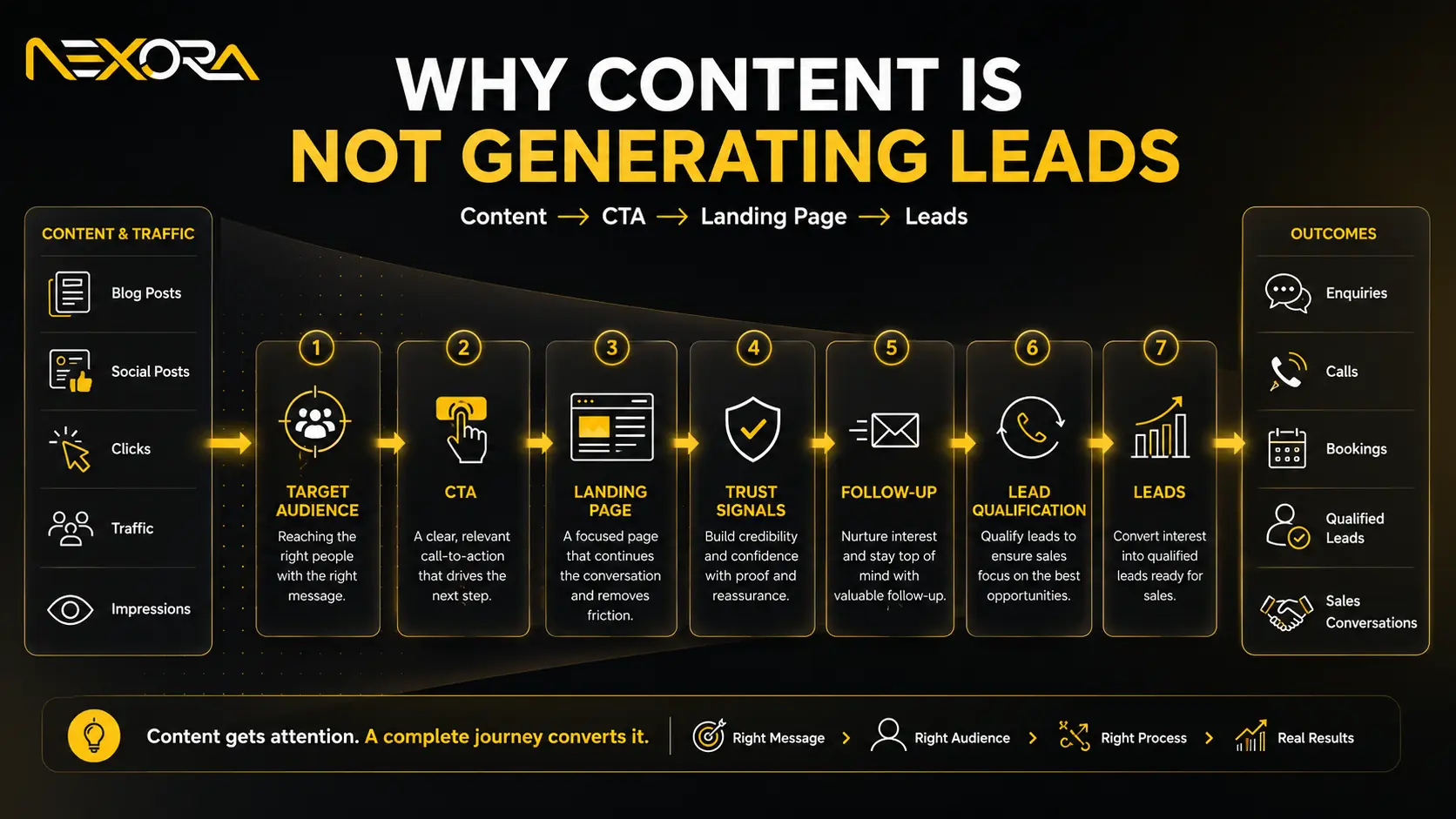
That usually happens because the content is not connected to a clear conversion journey.
Good content should do more than educate. It should:
- Attract the right person
- Answer a real pain point
- Build trust
- Guide the reader to the next step
- Make that step easy to take
If one part of that journey is missing, your content may get attention but still fail to generate business.
In this guide, I will explain why content fails to generate leads and how to fix it with better strategy, stronger CTAs, improved landing pages, trust signals, SEO structure, and follow-up systems.
Why is your content not generating leads?
Your content is not generating leads because it may be attracting the wrong audience, answering the wrong questions, missing a clear CTA, or sending visitors to a page that does not convert.
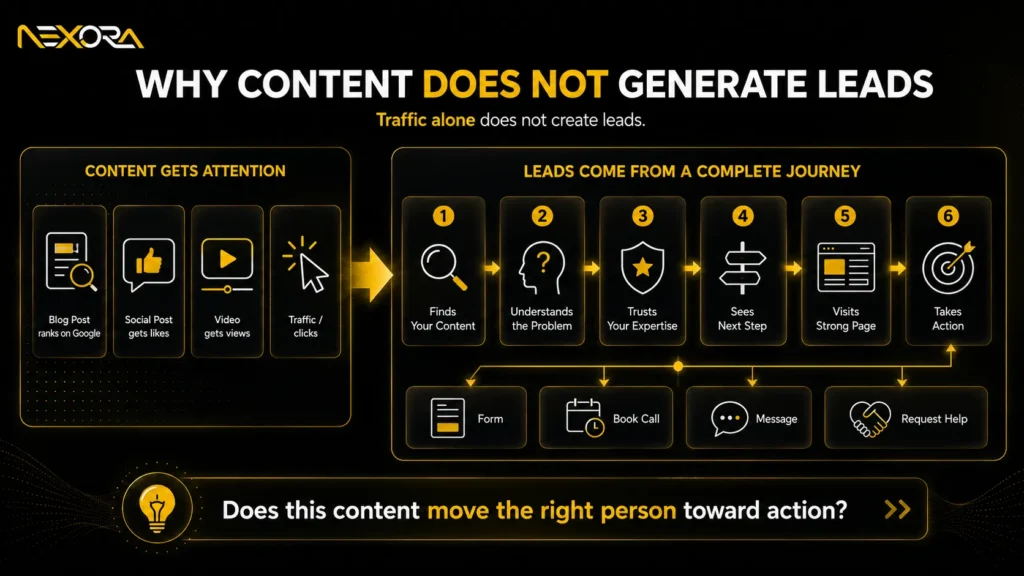
Traffic alone does not create leads.
A blog post can rank on Google.
A social post can get likes.
A video can get views.
But none of that guarantees enquiries.
Leads come from a complete journey.
That journey usually looks like this:
- A person finds your content.
- They understand their problem more clearly.
- They trust your expertise.
- They see a relevant next step.
- They click through to a strong page.
- They fill out a form, book a call, send a message, or request help.
If your content does not support this journey, people may read it and leave.
When I audit content for lead generation, I do not only ask:
“Is this content good?”
I ask:
“Does this content move the right person toward action?”
That question changes everything.
Are you creating content for the wrong audience?
Your content will not generate leads if it attracts people who are not ready, qualified, or relevant to your service.
Many businesses create content that is too broad. They write for everyone, so they end up converting no one.
Broad content may bring traffic, but it often brings people with:
- No budget
- No urgent need
- No buying intent
- No clear problem
- No reason to contact you
For example, a topic like “What is SEO?” may attract beginners who want basic information.
But a topic like “Why is my website traffic not turning into leads?” attracts business owners with a real problem.
That second topic has stronger commercial intent.
Before creating content, ask these questions:
- Who is my ideal customer?
- What problem are they actively trying to solve?
- What service do I want them to consider?
- What stage of the buying journey are they in?
- What action should they take after reading?
If you want leads, your content must speak to people who have a problem your business can actually solve.
Does your content solve a specific pain point?
Content fails when it stays too general.
People do not become leads because you explained a topic. They become leads when they feel you understand their exact problem.
A weak article gives surface-level advice.
A strong article:
- Explains the problem
- Shows why it happens
- Gives practical fixes
- Builds trust
- Helps the reader decide what to do next
For example, instead of writing only about “content marketing tips,” write about painful issues like:
- Why your content gets views but no enquiries
- Why your blog traffic is not converting
- Why your website content does not bring leads
- How to turn website visitors into consultation requests
- How to fix service pages that do not generate enquiries
These topics connect directly to business pain.
As an SEO expert, I do not judge content only by word count or keyword usage. I look at whether the content answers a real question, removes confusion, and gives the reader a clear reason to trust the business.
Helpful content should make the reader think:
- “This explains my problem clearly.”
- “This business understands what I am dealing with.”
- “I should speak to them.”
That is where lead generation begins.
Relevant Blog : Why Is My Website Not Ranking on Google? 17 Hidden Issues I Found After Auditing 300+ Websites
Is your content missing a clear call to action?
If your content does not tell readers what to do next, many of them will simply leave.
A call to action is not only a button. It is a clear next step.
It tells the reader how to move from reading to taking action.
Many businesses use weak CTAs like:
- Contact us
- Learn more
- Get in touch
- Read more
These are not always wrong, but they are often too vague.
A stronger CTA connects directly to the reader’s problem.
For example:
- If your content gets traffic but no leads, request a content and SEO audit.
- If your website visitors are not converting, book a website conversion review.
- If your service pages are not bringing enquiries, get a page structure audit.
One clear CTA is usually better than five random CTAs.
Every piece of content should have one primary goal.
Ask yourself:
- Do you want the reader to book a call?
- Do you want them to request a quote?
- Do you want them to download a guide?
- Do you want them to visit a service page?
- Do you want them to fill out a form?
Choose one main action and make it obvious.
CTA
If your content gets traffic but does not generate enquiries, Nexora Creation can review your content structure, keyword intent, and CTA flow through its SEO services.
Are you sending readers to the wrong page?
Your content may fail to generate leads if it sends visitors to a generic homepage instead of a relevant landing page or service page.
This is one of the most common mistakes I see.
A blog post explains a specific problem, but the CTA sends the reader to a broad homepage. The reader then has to figure out where to go next.
Most people will not do that extra work.
If someone reads a blog about content not generating leads, the next page should match that problem.
It could link to:
- An SEO audit page
- A content strategy service
- A website development service
- A landing page optimization service
- A CRM automation service
The journey should feel natural.
For example:
- A blog about SEO traffic not converting should link to an SEO service page.
- A blog about poor website leads should link to a website development or UI/UX page.
- A blog about missed enquiries should link to CRM or AI chatbot services.
- A blog about weak brand trust should link to branding or graphic design services.
This is why internal linking matters.
It helps users find the next step and helps search engines understand the relationship between your content and services.
A good content strategy does not end at publishing. It connects every useful article to a relevant business goal.
Does your website make it easy to become a lead?
Even strong content will struggle if your website is hard to use, slow, confusing, or weak on mobile.
A visitor may trust your content, but if the next page looks unclear, loads slowly, has no visible CTA, or asks for too much information, they may leave before contacting you.
Your website must make the lead journey simple.
Check these areas:
- Is the CTA visible above the fold?
- Does the page explain the offer clearly?
- Is the form short and easy to complete?
- Does the page work well on mobile?
- Are the service benefits clear?
- Are trust signals visible?
- Can visitors contact you quickly?
- Does the page load fast?
As a developer, I always look at the full journey.
I check how a visitor moves:
- From the blog to the service page
- From the service page to the contact form
- From the contact form to the follow-up process
A website does not generate leads just because it looks good.
It generates leads when it gives visitors:
- Clarity
- Confidence
- Trust
- A simple next step
CTA
If your content brings visitors but your website does not convert them, Nexora Creation can help improve your website structure, CTA placement, mobile experience, and landing page flow through its website development services.
Does your content build enough trust?
People do not become leads unless they trust you.
Your content can explain the problem well, but if the reader does not see proof, they may not feel ready to contact you.
Trust signals help reduce doubt.
Strong trust signals include:
- Client testimonials
- Case studies
- Before and after examples
- Portfolio projects
- Screenshots
- Results
- Process explanations
- Author expertise
- Clear contact details
- Professional design
- Consistent branding
For service businesses, case studies are especially powerful.
A case study shows:
- The problem
- The solution
- The outcome
It proves that you do not only give advice. You can actually solve the problem.
If you do not have detailed case studies yet, start with smaller proof elements:
- Add short project summaries.
- Show screenshots of completed work.
- Mention the industry you helped.
- Explain what changed after the work.
- Add client quotes where possible.
Trust does not always need huge numbers. It needs clarity and honesty.
A simple line like this works well:
“We redesigned the service page to make the offer clearer and improve enquiry flow.”
That is better than a generic claim like:
“We deliver amazing results.”
Is your content too informational and not commercial enough?
Educational content is useful, but if all your content is purely informational, it may not generate leads.
Some content teaches.
Some content builds trust.
Some content helps people compare solutions.
Some content pushes users closer to enquiry.
A strong content strategy needs all three stages.
Awareness content
This helps people understand a problem.
Example:
- Why is my website not getting traffic?
- What is SEO?
- Why does website speed matter?
Consideration content
This helps people compare options or understand solutions.
Example:
- SEO vs paid ads for lead generation
- Website redesign vs landing page optimization
- CRM automation vs manual follow-up
Conversion content
This helps people take action.
Example:
- Website SEO audit services for businesses with low leads
- Landing page design services for service businesses
- CRM automation setup for lead follow-up
If you only create awareness content, you may attract readers who are not ready to buy.
If you only create sales content, you may miss people who are still researching.
The best strategy connects both.
For the query “content not generating leads,” the reader is already problem-aware. They know something is wrong.
That means your content should educate, but it should also guide them toward a practical solution.
You should not be afraid to mention your services when they are relevant.
The key is to make the CTA helpful, not forced.
Are you ignoring search intent?
Search intent tells you what the user really wants when they type a query into Google.
If someone searches “content not generating leads,” they are not looking for a basic definition of content marketing.
They want to know:
- Why their content is failing
- What they are doing wrong
- How to fix the issue
- Whether they need expert help
- What steps they should take next
Your blog should match that intent quickly.
That means:
- Your introduction should answer the problem directly.
- Your headings should cover the causes.
- Your sections should offer practical fixes.
- Your CTA should match the solution.
Search intent can usually fall into these categories:
- Informational: The user wants to learn.
- Commercial: The user is comparing solutions.
- Transactional: The user wants to buy or take action.
- Navigational: The user wants a specific brand or page.
The query “content not generating leads” is both informational and commercial.
The user wants answers, but they may also need expert help.
That makes it a strong topic for a service business blog.
Are you tracking the right conversions?
You cannot improve lead generation if you do not track what counts as a lead.
Many businesses only look at:
- Traffic
- Impressions
- Clicks
- Likes
- Views
Those numbers matter, but they do not show the full picture.
You should also track:
- Form submissions
- Phone calls
- WhatsApp clicks
- Email clicks
- Booking clicks
- Quote requests
- Newsletter signups
- Lead magnet downloads
- CRM enquiries
- Chatbot conversations
If your content gets clicks but no conversions, you need to know where users drop off.
Ask these questions:
- Do users leave after reading the blog?
- Do they click the CTA but leave the service page?
- Do they open the form but not submit it?
- Do they submit enquiries but never receive follow-up?
Tracking helps you fix the real issue instead of guessing.
For example:
- If users read the blog but do not click the CTA, the CTA may be weak.
- If users click the CTA but do not fill the form, the landing page or form may be the problem.
- If users submit forms but do not become customers, the follow-up system may be weak.
Good content needs good measurement.
Are you following up after someone shows interest?
Content can start the lead generation process, but follow-up often closes the gap.
A visitor may:
- Read your blog
- Visit your service page
- Fill out a form
- Send a message
- Download a guide
- Request a quote
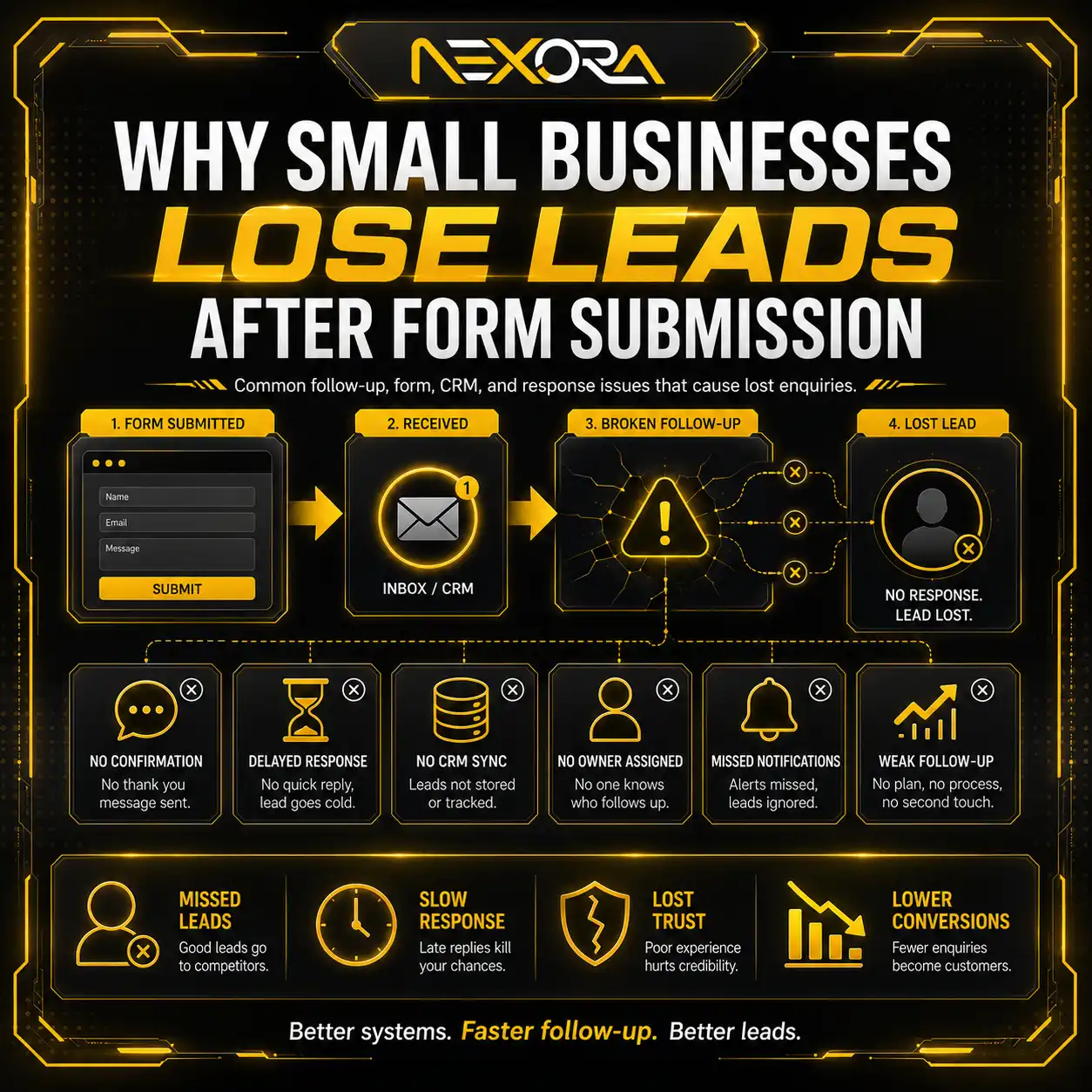
But if your business replies too late or does not follow up properly, that lead can go cold.
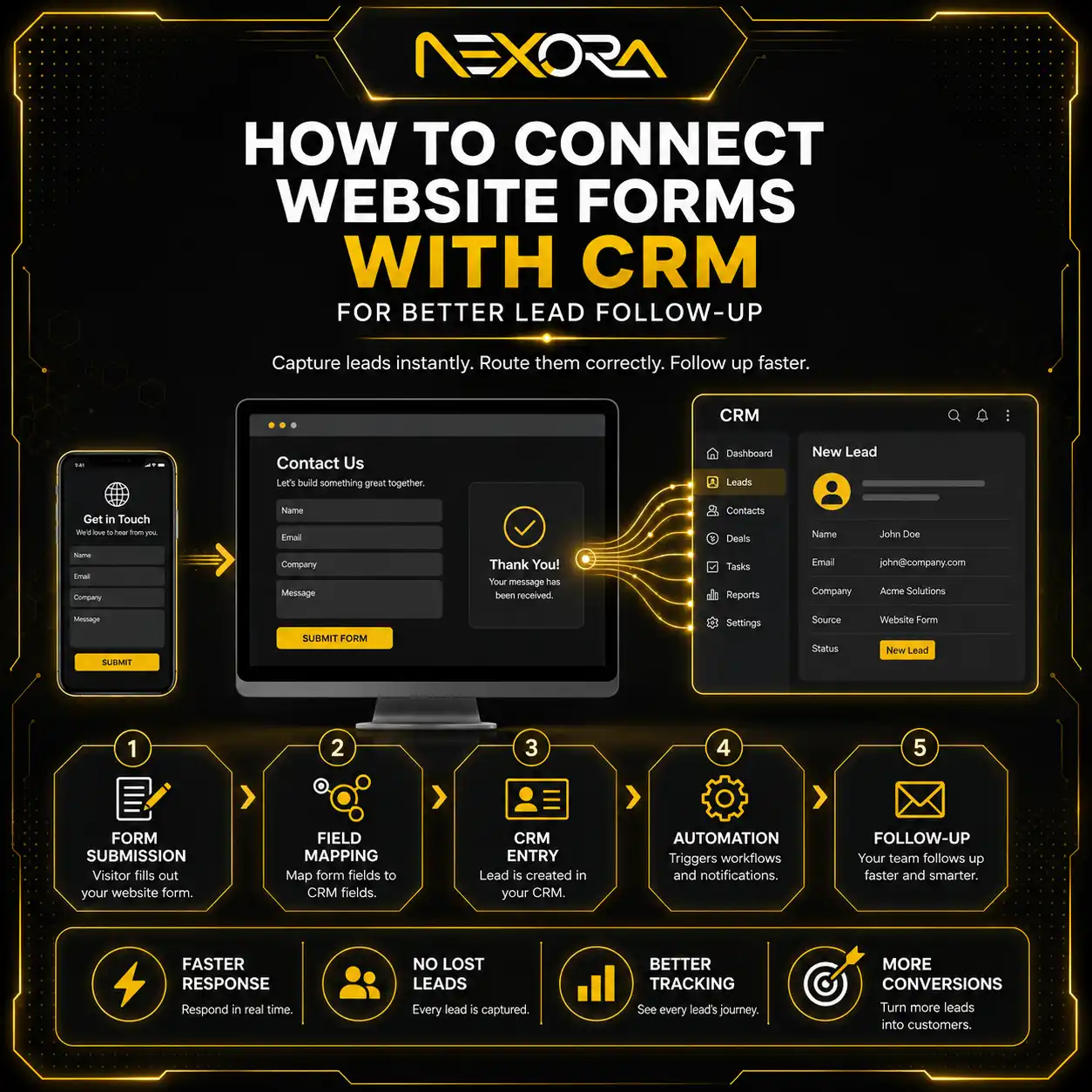
This is where CRM automation and AI support can help.
A proper follow-up system can:
- Capture new leads
- Send instant confirmation
- Notify your team
- Qualify the lead
- Send reminder emails
- Book consultations
- Track pipeline stages
- Follow up with people who did not reply
Many businesses lose leads not because their content is bad, but because they do not have a system after the enquiry.
A CRM or AI chatbot can help turn interest into conversations. It can also reduce manual work and make sure no lead gets ignored.
CTA
If your business gets enquiries but struggles to manage follow-up, CRM automation or AI chatbot setup can help create a smoother lead journey.
How can you fix content that is not generating leads?
You can fix content that is not generating leads by auditing the full journey, not only the article or post.
Start with a content-to-lead audit.
Here is the framework I use:
1. Check the search intent
Ask what the user wants when they search the topic.
Make sure your content answers that intent in the first few paragraphs.
2. Review the audience
Check whether the content attracts people who match your ideal customer.
If it attracts the wrong audience, change the topic angle.
3. Improve the headline
Your title should match the problem clearly and make the user want to click.
4. Strengthen the introduction
Give the answer early.
Do not make the reader wait too long.
5. Add one clear CTA
Choose one primary next step for the content.
Make it relevant to the reader’s problem.
6. Link to the right page
Do not send every visitor to the homepage.
Link to the most relevant service page or landing page.
7. Add trust proof
Use:
- Testimonials
- Case studies
- Project examples
- Screenshots
- Expert insights
- Results where possible
8. Improve the landing page
Make the landing page:
- Clear
- Fast
- Mobile-friendly
- Focused on one offer
- Easy to contact from
9. Track conversions
Measure:
- Form submissions
- Calls
- Bookings
- Email clicks
- WhatsApp clicks
- CRM activity
10. Build a follow-up system
Use:
- CRM automation
- Email follow-ups
- AI chatbot flows
- Instant lead notifications
- Booking reminders
This approach helps you stop guessing.
It shows exactly where your content-to-lead journey is breaking.
What type of content generates the most leads?
The content that generates the most leads usually answers specific buyer problems and connects directly to a relevant service.
High-performing lead generation content often includes:
- Problem-solving blog posts
- Comparison articles
- Service-focused guides
- Audit checklists
- Case studies
- Industry-specific landing pages
- Pricing or cost guides
- Mistake-based articles
- Before and after breakdowns
- FAQs based on real customer questions
For example, these topics have stronger lead potential:
- Why is my website not generating leads?
- Why is my content not generating leads?
- How much does a business website cost?
- Do I need SEO or paid ads?
- How can CRM automation improve lead follow-up?
- What should a landing page include?
- Why is my website traffic not converting?
These topics attract people who already feel a problem.
That makes them more likely to take action.
How many CTAs should a blog post have?
A blog post should usually have one primary CTA and a few natural supporting CTAs.
Too many CTAs can confuse readers.
If you ask them to do too many things at once, they may take no action.
For example, do not ask readers to:
- Book a call
- Download a guide
- Follow social media
- Read another blog
- Visit a service page
- Subscribe to a newsletter
All at the same time.
For most service business blogs, use this structure:
- One soft CTA near the middle
- One relevant service CTA after a problem-solving section
- One final CTA in the conclusion
The CTA should match the topic.
For this blog, the best CTA is not “Follow us on Instagram.”
The best CTA is something like:
- Request a content and website conversion audit.
- Review your SEO and CTA flow.
- Improve your website content and lead journey.
The CTA should feel like the next logical step.
Should your blog link to your homepage or service page?
Your blog should usually link to the most relevant service page, not only the homepage.
A homepage is broad.
A service page is specific.
If someone reads about a specific problem, they need a specific solution.
For example:
- A blog about content not generating leads should link to SEO, website development, or CRM services.
- A blog about poor landing page performance should link to website development or UI/UX services.
- A blog about missed enquiries should link to CRM automation or AI chatbot services.
This creates a smoother user journey and improves internal SEO structure.
Internal links also help search engines understand which pages are important and how your topics connect.
Can AI content generate leads?
AI content can support lead generation, but only when a real strategy, expert editing, and business context guide it.
AI can help with:
- Outlines
- Ideas
- Research organization
- Drafts
- Topic expansion
- FAQ generation
But AI content often fails when it:
- Sounds generic
- Repeats common advice
- Has no real examples
- Does not include expertise
- Has no clear CTA
- Does not connect to business goals
Lead-generating content needs:
- Clear search intent
- Real business insight
- Original examples
- Strong positioning
- Relevant CTAs
- Service alignment
- Trust proof
- Human editing
As an SEO and website specialist, I would not publish AI content without reviewing the strategy, accuracy, tone, structure, and conversion path.
AI can help you create content faster, but expert judgment helps the content convert.
How long does content take to generate leads?
Content can take weeks or months to generate leads, depending on your website authority, keyword competition, content quality, search demand, and conversion setup.
Some content may bring leads quickly if:
- It targets a high-intent audience
- Your website already has traffic
- The CTA is clear
- The service page is strong
- The offer matches the reader’s problem
Other content may need more time to rank and build visibility.
But time is not the only factor.
A blog that ranks but has no CTA may never generate leads.
A social post that gets engagement but sends users to a weak page may not convert.
A landing page with no trust proof may lose interested visitors.
That is why you should measure both traffic and conversions.
A strong content strategy improves over time.
You publish, track, learn, update, and improve.
When should you get expert help?
You should get expert help when your content gets impressions, clicks, or engagement but does not bring enquiries, calls, bookings, or qualified leads.
You may also need help if:
- You do not know which keywords to target.
- Your blog traffic is not converting.
- Your service pages are weak.
- Your CTAs are unclear.
- Your website design looks good but does not generate leads.
- You do not track conversions properly.
- You lose leads because follow-up is slow.
- You need a better content-to-service strategy.
This is usually not a single content problem.
It is a strategy, website, SEO, and conversion problem working together.
That is why I recommend reviewing the full journey:
- From keyword to content
- From content to CTA
- From CTA to landing page
- From landing page to follow-up
How can you turn content into a lead generation system?
You can turn content into a lead generation system by connecting your SEO strategy, website structure, landing pages, CTAs, trust signals, and follow-up process.
Here is the simple version:
- Create content for real buyer problems.
- Answer the main question early.
- Use question-based headings.
- Add practical solutions.
- Show proof and experience.
- Link to relevant service pages.
- Use one clear CTA.
- Make your website easy to use.
- Track every lead action.
- Follow up quickly.
When these pieces work together, content does not only bring traffic. It supports business growth.
Nexora Creation helps businesses connect SEO content, website structure, landing pages, and automation so content can support real lead generation instead of only attracting views.
Conclusion
If your content is not generating leads, do not assume the content is useless.
The issue may be:
- The audience
- The CTA
- The landing page
- The trust signals
- The search intent
- The tracking
- The follow-up system
The best way to fix it is to audit the full journey.
Ask yourself:
- Is this content attracting the right person?
- Does it answer a specific pain point?
- Does it give a clear next step?
- Does it link to the right service page?
- Does the landing page build trust?
- Can the visitor contact us easily?
- Do we follow up properly?
Content works best when it connects education with action.
If you want your content to generate more qualified enquiries, start by improving the journey from search to content, from content to service page, and from service page to lead capture.
FAQs
Why is my content getting traffic but no leads?
Your content may be getting traffic but no leads because it attracts the wrong audience, lacks a clear CTA, does not build enough trust, or sends visitors to an unoptimized page.
How do I generate leads from blog content?
You can generate leads from blog content by targeting buyer-intent keywords, answering specific pain points, adding relevant CTAs, linking to service pages, and making your website easy to contact.
What type of content generates the most leads?
Problem-solving content, comparison articles, service guides, case studies, audit checklists, and cost-related topics often generate stronger leads because they attract people with active business problems.
How many CTAs should a blog post have?
A blog post should usually have one primary CTA and a few natural supporting CTAs. The CTA should match the topic and guide readers to the most relevant next step.
Should blog content link to a homepage or service page?
Blog content should usually link to the most relevant service page instead of only the homepage. A specific service page gives readers a clearer next step.
Can AI content generate leads?
AI content can generate leads if it is guided by search intent, expert editing, original insights, strong CTAs, and a clear conversion journey. Generic AI content usually does not perform well.
How long does content take to generate leads?
Content can take weeks or months to generate leads, depending on keyword competition, website authority, content quality, and conversion setup. However, strong CTAs and optimized landing pages can improve results faster.