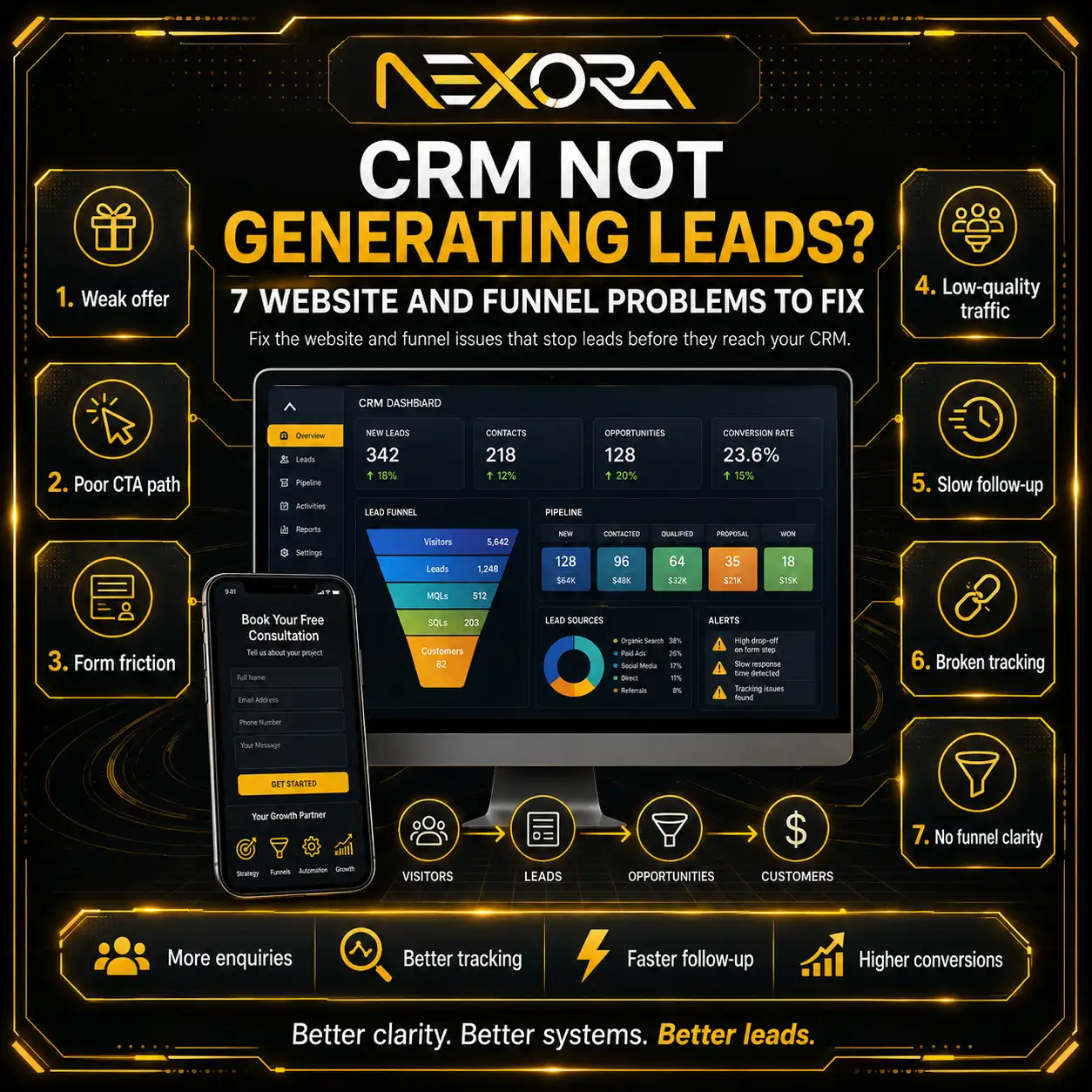

A business website can attract visitors and still generate few or no enquiries.
This often leads business owners to assume they need more SEO, more advertising or more website traffic. Sometimes that is true. However, increasing traffic will not solve the problem when the existing website does not clearly communicate the offer, build confidence or make the next step easy.
In our website, SEO and conversion reviews at Nexora Creation, we rarely find one single reason a website is not generating leads. The problem is usually a combination of factors, such as:
- Attracting visitors with the wrong intent
- Unclear messaging
- Weak service pages
- Limited evidence and trust
- An unconvincing offer
- Poor mobile usability
- Confusing calls to action
- Difficult or broken forms
- Incorrect conversion tracking
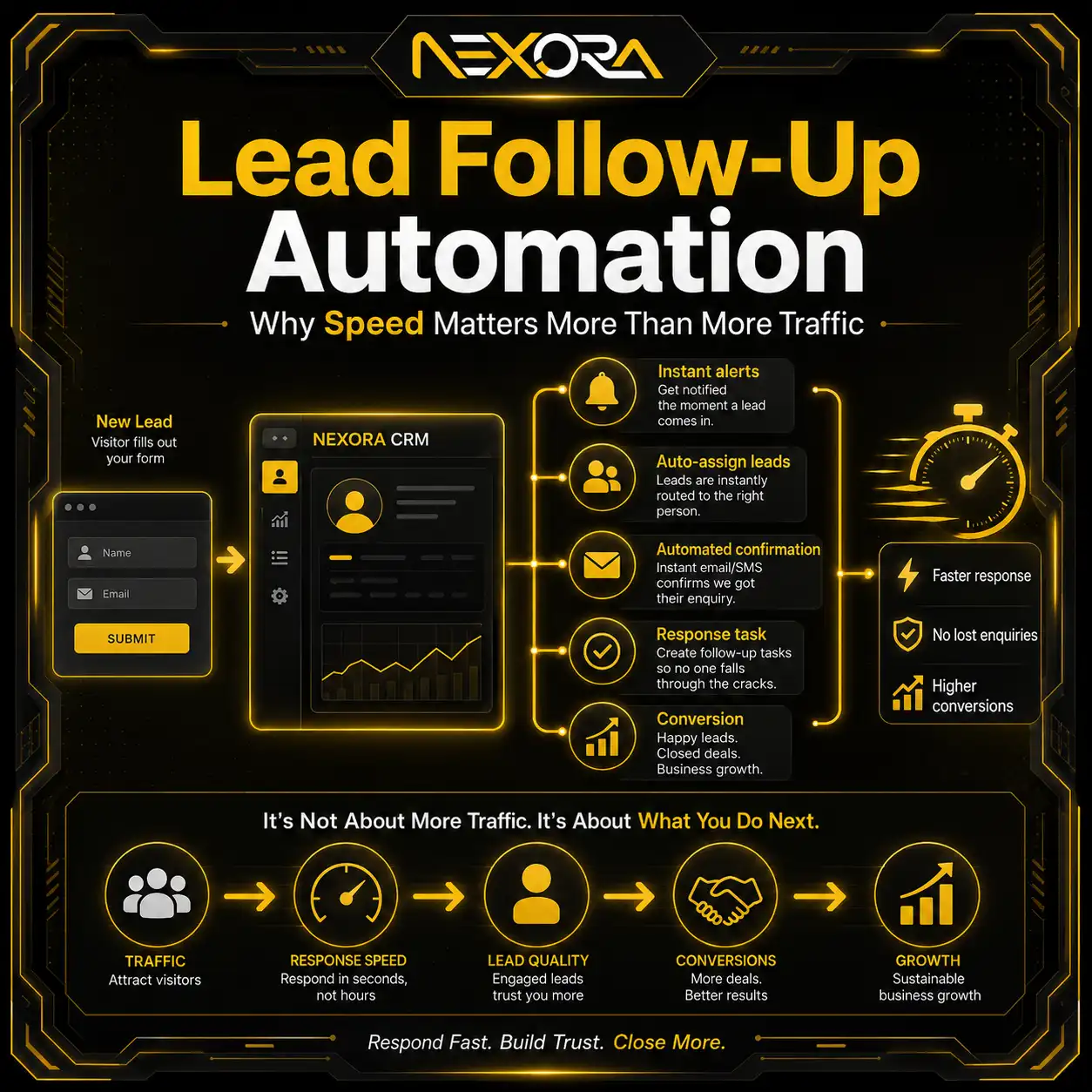
- Slow or inconsistent lead follow-up
Traffic creates an opportunity, but the website still has to turn that opportunity into understanding, confidence and action.
This guide explains how to identify why your website is not generating leads and how to fix the parts of the customer journey that may be preventing visitors from contacting your business.
Why Is My Website Not Generating Leads?
Your website may not be generating leads because it is attracting the wrong visitors, failing to explain its value clearly, creating uncertainty or making it difficult for interested visitors to take the next step.
A website lead usually depends on several connected stages:
- The right person finds the website.
- The landing page matches what they need.
- The visitor understands the service.
- The business appears credible.
- The offer feels relevant.
- The visitor can see a clear next action.
- The form, phone link or booking process works.
- The enquiry is measured and handled correctly.
If any important stage fails, traffic may not become a lead.
This is why “no leads from website traffic” should not automatically be diagnosed as an SEO problem or a design problem. The complete journey should be reviewed before deciding what to change.
First, Confirm Whether You Have a Traffic Problem or a Conversion Problem
Before redesigning pages or increasing advertising spend, determine whether enough relevant people are reaching the website.
You may have a traffic problem when:
- Important pages receive very few visits
- The website has little visibility for relevant searches
- Most visitors arrive through irrelevant queries
- Target service pages are not indexed or discoverable
- Traffic comes primarily from locations you do not serve
- The website attracts informational visitors when the business needs commercial enquiries
- The business depends on one unstable traffic source
You may have a conversion problem when:
- Relevant service pages receive traffic but generate few enquiries
- Visitors engage with the site but rarely contact the business
- Forms are started but not completed
- Phone numbers receive few clicks
- Paid campaigns generate clicks but few qualified leads
- Mobile visitors abandon key pages
- Users reach the contact page but do not submit the form
A business may also have both problems at the same time.
For example, the website may receive limited traffic, while the visitors who do arrive encounter unclear service pages and weak calls to action.
The correct diagnosis should therefore compare:
- Traffic volume
- Search queries
- Landing pages
- Visitor location
- Device type
- Engagement
- Form submissions
- Phone calls
- Bookings
- Lead quality
Do not judge performance from total traffic alone.
A smaller number of relevant visitors may create more business value than a larger number of people who have no commercial reason to contact you.
1. Your Website Is Attracting the Wrong Traffic
Not every website visitor is a potential lead.
A page may receive traffic from people who are:
- Looking for free information
- Researching a topic
- Searching for jobs
- Looking for a different service
- Outside the business’s service area
- Trying to solve the problem themselves
- Comparing prices without purchase intent
- Searching for a definition rather than a provider
This creates an important distinction between traffic volume and traffic quality.
For example, a company offering professional website redesign services may rank for a broad informational query such as “what is web design.” That traffic may increase page views without producing many enquiries.
A more commercially relevant query might be:
- Website redesign agency
- Conversion-focused website design
- Website redesign for service businesses
- Hire a WordPress website designer
Review Google Search Console and analytics data to determine which queries and pages are creating visits.
Ask:
- Do the queries match services the business sells?
- Do visitors come from relevant countries or service areas?
- Are commercial pages receiving traffic?
- Are blog visitors moving to service pages?
- Which landing pages produce actual enquiries?
- Which queries produce visibility but no business value?
Do not remove informational content simply because it does not convert directly. Informational articles can build awareness, authority and internal pathways.
However, each article should help the visitor reach a relevant next step when a natural connection exists.
2. The Website Does Not Explain the Offer Clearly
Visitors should not have to study the website to determine what the business does.
Within the first screen of an important page, they should be able to understand:
- What service is offered
- Who it is intended for
- What problem it solves
- What outcome it supports
- What the visitor should do next
A vague homepage headline such as:
Helping businesses achieve their goals through innovative solutions
does not communicate enough useful information.
A clearer version might be:
Conversion-Focused Websites and SEO Systems for Service Businesses
The supporting text can then explain the specific outcomes, services and intended customers.
Clarity is especially important when the website offers several services. Presenting everything with equal emphasis can make it difficult for visitors to identify the right starting point.
Organize services according to customer needs rather than internal business terminology.
Instead of expecting visitors to understand every technical service, help them identify the problem they want to solve:
- Generate more qualified leads
- Improve local search visibility
- Redesign an underperforming website
- Automate lead handling
- Improve landing-page conversions
Clear messaging does not require oversimplifying the business. It requires organizing information around the visitor’s decision.
3. The Page Does Not Match the Visitor’s Search Intent
A visitor expects the page to continue the topic that brought them to the website.
If someone searches for “emergency plumbing service” but reaches a general homepage describing every plumbing service, the page may feel less relevant than a focused emergency-service page.
This mismatch can occur between:
- The search query and page
- The advertisement and landing page
- The social post and linked page
- The email offer and destination
- The internal-link anchor and destination
A strong journey maintains continuity:
Search need → page headline → relevant explanation → evidence → next action
Check whether each important landing page clearly addresses:
- The exact service
- The visitor’s problem
- The appropriate customer type
- The relevant location, where necessary
- The promised offer
- The expected next step
This principle is particularly important for paid traffic. Google Ads advises advertisers to use landing pages that closely match their advertisements and keywords, because users should be able to find what the advertisement promised.
Google Ads landing page experience
4. The Website Focuses Too Much on the Company
Many business websites begin by talking about themselves:
- How long the company has operated
- What the company believes
- How passionate the team is
- How many services it offers
- Why the company is different
This information can support trust, but it should not replace the visitor-focused message.
A potential customer initially wants to know:
- Can this business solve my problem?
- Does it work with businesses or customers like me?
- What does the service include?
- What outcome can I realistically expect?
- What should I do next?
A useful page normally starts with the customer’s problem and the relevant solution. Company history, values and team information can then support the decision later.
Compare these approaches:
Company-focused:
We are a passionate and innovative team committed to delivering exceptional solutions.
Customer-focused:
If your website receives traffic but produces few enquiries, we can review the messaging, user journey, forms and conversion tracking to identify where potential leads are being lost.
The second version connects the service to a recognizable problem.
It does not guarantee a result, but it gives the visitor a clearer reason to continue reading.
5. Your Value Proposition Is Too Generic
A value proposition should explain why a suitable customer should consider the business.
Generic statements such as these provide little differentiation:
- High-quality service
- Affordable solutions
- Customer satisfaction
- Professional team
- Tailored approach
- Best results
These claims are common and difficult to verify.
A stronger value proposition may combine:
- The target customer
- The specific problem
- The service
- The approach
- A credible differentiator
For example:
We redesign service-business websites around clearer messaging, stronger trust signals and measurable conversion paths—not appearance alone.
This gives the visitor more information than “professional web design services.”
A value proposition does not need to make the business sound revolutionary. It needs to make the relevance and approach clear.
6. Your Service Pages Are Too Weak
For many businesses, service pages are among the most commercially important pages on the website.
Visitors may reach them directly through:
- Google Search
- Google Ads
- Internal links
- Directory profiles
- Social posts
- Referral links
A weak service page often contains:
- A short generic introduction
- A list of features
- Little explanation of the process
- No examples or proof
- No FAQs
- One generic contact button
A strong service page should normally answer:
- What is the service?
- Who needs it?
- What problems does it address?
- What is included?
- How does the process work?
- What information will the customer need?
- Why is the business qualified?
- What happens after an enquiry?
- What questions may delay the decision?
- What is the appropriate next action?
The page should contain enough information to support a decision without adding text only to increase word count.
Google recommends creating helpful, reliable and people-first content that demonstrates first-hand knowledge and provides visitors with a satisfying answer.
At Nexora Creation, we review service pages as both search destinations and decision pages. A page may rank for a relevant query but still underperform when its content does not answer the practical questions a potential customer asks before contacting the business.
conversion-focused website development
7. Visitors Cannot Find Enough Evidence to Trust You
Trust is an important part of lead generation, but trust is broader than adding a few testimonials.
Visitors may need evidence that:
- The business is genuine
- The service is relevant
- The team has suitable experience
- Previous customers were satisfied
- Claims are realistic
- Their information will be handled responsibly
- The business will respond
- The next step carries acceptable risk
Useful trust signals may include:
- Reviews
- Detailed testimonials
- Case studies
- Real project examples
- Before-and-after comparisons
- Certifications or licences
- Team information
- Clear contact details
- Business policies
- Guarantees with clear conditions
- Client or partner logos
- Transparent process information
Trust signals should appear near the claims they support.
For example:
- Place a related case study near a service description.
- Place reassurance near a form.
- Place reviews close to an important CTA.
- Place credentials near technical or regulated claims.
- Explain guarantees rather than displaying a vague badge.
Avoid using anonymous testimonials such as “Great service!” when stronger information is available.
A more convincing testimonial explains:
- Who the customer was
- What problem they had
- What work was completed
- What changed
- Why they valued the experience
Real evidence is generally more persuasive than decorative trust icons.
8. Your Calls to Action Are Vague or Difficult to Find
A visitor may be interested but still fail to convert when the next action is unclear.
Common CTA problems include:
- Only one CTA on a long page
- Generic wording such as “Submit”
- Several competing primary actions
- A button hidden below unnecessary content
- Different CTA wording in every section
- No explanation of what happens next
- Poor contrast or tap size on mobile
- Sending visitors to a generic contact page unnecessarily
Use CTA wording that communicates the action or outcome.
Examples include:
- Request a Website Review
- Get a Project Quote
- Book a Strategy Consultation
- Schedule an Inspection
- Call for Same-Day Service
- Request a Catering Quote
- Speak With a Specialist
The right CTA depends on the service and level of customer commitment.
A visitor considering an expensive or complex service may not be ready to “Buy Now.” A consultation or project review may be the more appropriate next step.
Use one primary CTA consistently across the page. Repeat it at natural decision points:
- In the hero
- After explaining the service
- Near proof or case studies
- After FAQs
- At the end of the page
Repetition is useful when it reduces scrolling and supports the same action. It becomes distracting when every section presents a different offer.
9. Your Offer Is Not Strong or Specific Enough
A CTA tells the visitor what to do. The offer explains what they receive by doing it.
“Contact us” is an action, but it does not explain the value of contacting the business.
A clearer offer might be:
- Request a tailored estimate
- Book a 20-minute discovery call
- Get a landing-page review
- Schedule an on-site inspection
- Request availability for your date
- Receive a project-scope consultation
Explain:
- What the visitor receives
- Whether there is a cost
- How long it takes
- What information is required
- What happens after submission
- Who will contact them
- Whether there is any obligation
Do not invent urgency or scarcity.
Statements such as “Only two places left” or countdown timers should only be used when they are genuine.
A credible, clearly explained offer builds more sustainable trust than artificial pressure.
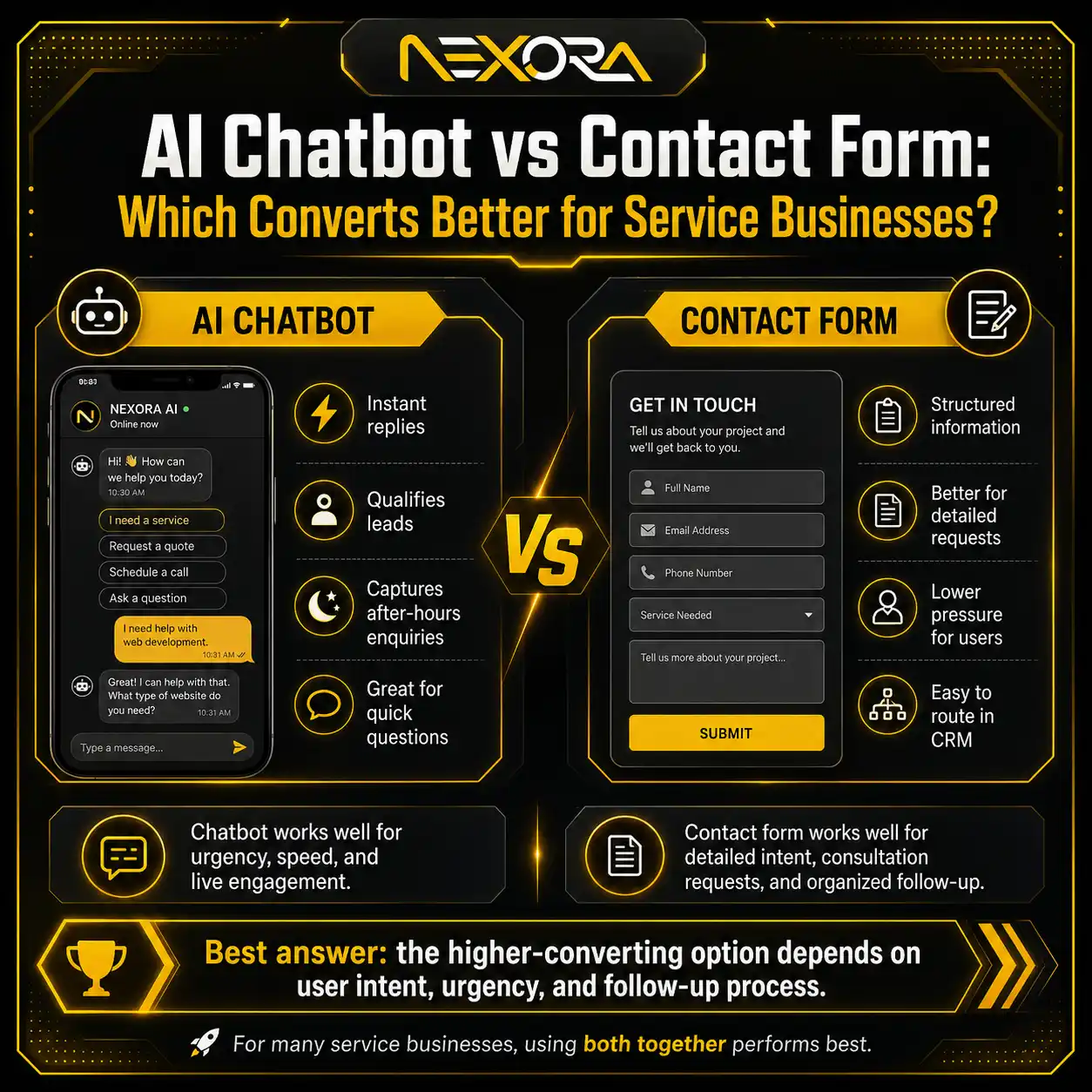
10. Your Form Creates Too Much Friction
A form may stop conversions even when the rest of the page works well.
Common problems include:
- Too many required fields
- Asking for information too early
- Poor mobile spacing
- Unclear labels
- Broken validation
- No confirmation message
- A submit button that does not respond
- Requests never reaching the business
- Aggressive spam protection
- No privacy reassurance
Ask only for the information needed to take the next step.
An initial service enquiry may require:
- Name
- Email or phone number
- Service needed
- A short message
- Location, when operationally necessary
More detailed information can often be collected after the business establishes contact.
The ideal form length depends on lead volume and qualification needs. A shorter form may increase submissions but reduce qualification, while a longer form may reduce volume but provide more detail.
Test the balance rather than assuming that the shortest possible form is always best.
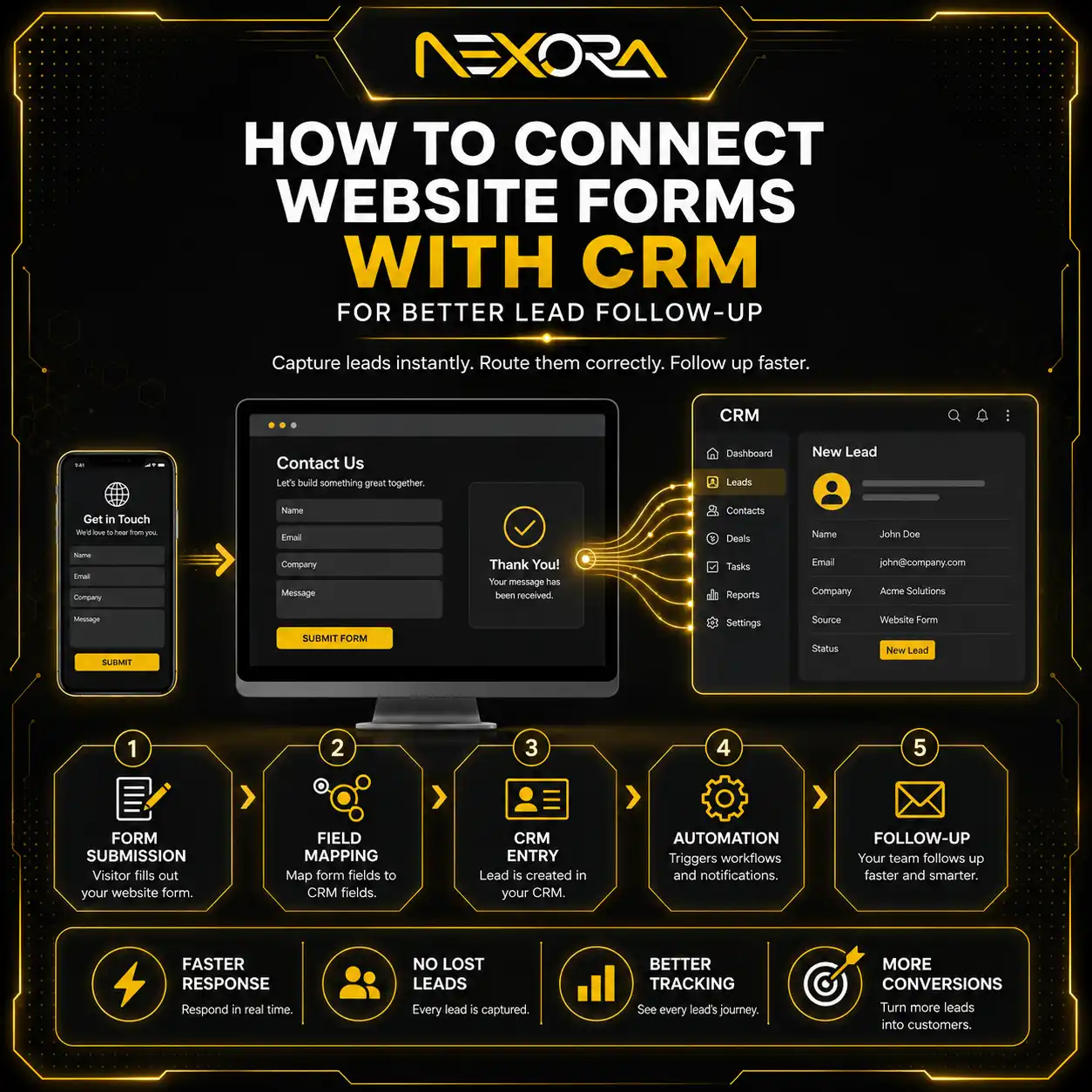
Most importantly, test the complete process:
- Submit the form on desktop.
- Submit it on mobile.
- Test validation errors.
- Confirm the success message.
- Confirm the email or CRM record arrives.
- Confirm source information is recorded.
- Check how quickly the responsible person receives it.
A successful form message does not prove the lead reached the business.
11. The Mobile Experience Is Losing Potential Leads
A website may appear polished on desktop but become difficult to use on a phone.
Mobile conversion problems include:
- Small buttons
- Tiny text
- Large images
- Content shifting while loading
- Difficult menus
- Pop-ups covering the screen
- Forms requiring excessive typing
- Phone numbers that are not clickable
- Important CTAs appearing too far down the page
- Slow interaction after the page appears
Google’s Core Web Vitals measure real-world loading performance, responsiveness and visual stability. Google recommends achieving good Core Web Vitals for search and user experience, while also clarifying that no single technical score guarantees rankings or conversions.
Review mobile pages manually rather than relying only on automated tools.
Complete the same actions a real customer would:
- Read the offer
- Open the menu
- View evidence
- Tap the phone number
- Complete the form
- Use the back button
- Close any pop-up
- Reach the thank-you page
Technical metrics can identify problems, but direct journey testing shows how those problems affect the customer.
12. The Website Is Slow or Technically Unreliable
Visitors are less likely to enquire when pages load slowly or important elements do not work.
Potential issues include:
- Oversized images
- Heavy video backgrounds
- Unnecessary scripts
- Too many third-party tools
- Poor hosting
- Plugin conflicts
- Broken forms
- Incorrect redirects
- Missing pages
- Browser compatibility problems
- Security warnings
Speed should not be treated as an isolated score.
Review whether visitors can quickly access:
- The main content
- The service explanation
- The primary CTA
- The phone number
- The form
A page with a strong automated score may still be confusing. A visually impressive page may still fail when its form is broken.
Technical performance and communication must work together.
13. Your Contact Page Creates Uncertainty
A contact page should make communication easier, not introduce another obstacle.
It should clearly show:
- How to contact the business
- Which enquiry method is preferred
- When the business normally responds
- Which details the visitor should provide
- Relevant service areas or availability
- Alternative contact methods where appropriate
- What happens after submission
Avoid displaying only a form with no context.
A visitor may hesitate when they do not know:
- Who will receive the message
- How quickly they will receive a response
- Whether the consultation costs anything
- Whether the business handles their type of request
- What information they should prepare
A short explanation can reduce that uncertainty.
14. Your Website Does Not Answer Important Objections
Visitors may be interested but not ready to contact the business because they still have unanswered concerns.
Typical objections relate to:
- Price
- Timing
- Suitability
- Experience
- Process
- Risk
- Contracts
- Support
- Location
- Availability
Use page content and FAQs to answer genuine decision questions.
For example:
- How much does the service typically depend on scope?
- How long does the process usually take?
- What happens after the initial call?
- Does the customer need to prepare anything?
- Can the work be completed remotely?
- Which businesses are not a suitable fit?
- What support is available after completion?
Do not add FAQs only to target keyword variations.
Include questions that customers actually ask and that help them make a better-informed decision.
15. You Are Not Measuring Leads Correctly
Sometimes a website appears not to generate leads because the measurement setup is incomplete.
Other times, analytics reports conversions that did not create real enquiries.
Track meaningful actions such as:
- Successful form submissions
- Qualified phone calls
- Appointment bookings
- Quote requests
- Click-to-call actions
- Relevant email clicks
- Live-chat enquiries
- Completed purchases, where applicable
Google Analytics uses events and key events to measure important user actions, and conversions can be created from Analytics events for consistent measurement across Analytics and Google Ads.
Avoid counting every button click as a qualified lead.
For example:
- Opening a form is not a completed enquiry.
- Clicking a phone number does not prove the call connected.
- Reaching a thank-you page may be inaccurate if the page can be opened directly.
- Spam submissions should not be treated as qualified leads.
Compare analytics data with actual business records:
- Form inbox
- CRM
- Call-tracking records
- Booking system
- Sales pipeline
- Customer outcomes
The goal is not to report the highest conversion number. The goal is to understand which website interactions create genuine business opportunities.
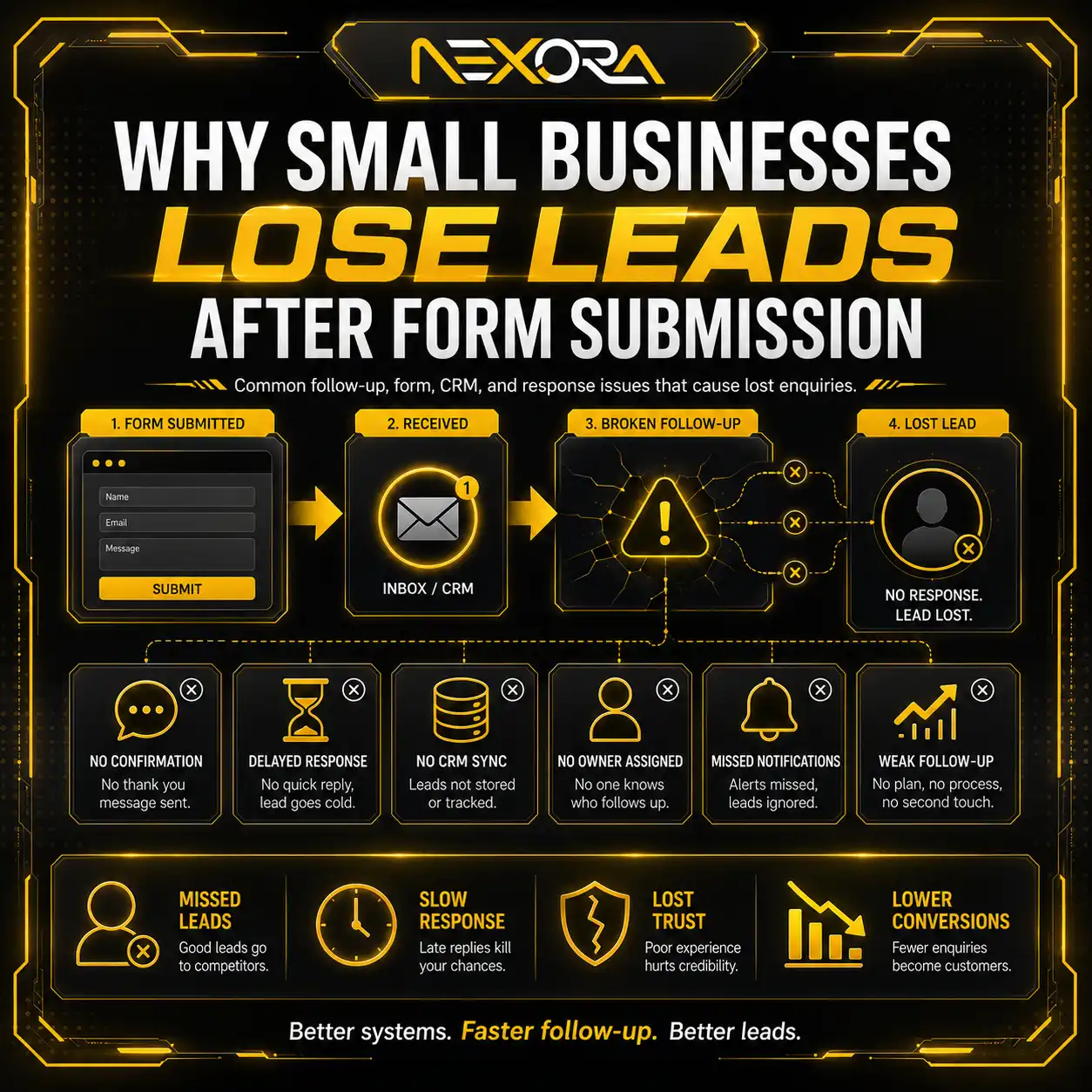
16. Leads Are Not Being Handled Effectively
The website may generate enquiries while the business still feels that it is “not getting leads.”
This can happen when:
- Enquiries go to an unmonitored inbox
- Calls are missed
- Responses are delayed
- No one owns the follow-up
- Leads are not qualified consistently
- Sales outcomes are not recorded
- Spam and real leads are mixed together
Website conversion optimization should therefore include lead delivery.
Confirm:
- Where each form submission goes
- Who receives the notification
- How quickly enquiries are reviewed
- What happens when a call is missed
- Whether the source is recorded
- Whether the lead becomes qualified
- Whether the final outcome is tracked
A website should not be judged only by how many forms it submits. It should be evaluated by how effectively it creates and supports qualified business conversations.
A Practical Website Lead-Generation Audit
Use this checklist to identify where potential leads may be lost.
Traffic and intent
- Are relevant people reaching the website?
- Which queries and channels create visits?
- Are target service pages receiving traffic?
- Are visitors located in relevant markets?
- Which pages contribute to genuine enquiries?
Messaging
- Does the homepage clearly explain the business?
- Does each service page target one clear need?
- Is the value proposition specific?
- Does the content focus on customer problems?
- Do landing pages match their traffic sources?
Trust
- Are reviews and testimonials visible?
- Are case studies or examples available?
- Are claims supported by evidence?
- Is the team or business identifiable?
- Are contact and policy details clear?
Conversion path
- Is there one clear primary CTA?
- Is the offer explained?
- Are CTAs placed at useful points?
- Is the form appropriate for the service?
- Does the contact page reduce uncertainty?
Usability and technical performance
- Does the website work properly on mobile?
- Do important pages load reliably?
- Are forms, buttons and phone links functional?
- Are intrusive pop-ups creating friction?
- Can visitors navigate without confusion?
Measurement and follow-up
- Are real enquiries tracked?
- Is tracking tested?
- Do leads reach the correct person?
- Is source and lead quality recorded?
- Are outcomes connected back to marketing activity?
The purpose of the audit is to identify the weakest stage, not to redesign everything without evidence.
A 30-Day Website Lead-Generation Improvement Plan
Week 1: Diagnose the journey
Review:
- Google Search Console queries
- Landing-page traffic
- Forms and phone calls
- Important service pages
- Mobile usability
- Conversion tracking
- Lead-delivery process
Identify whether the primary issue is traffic, relevance, trust, usability, measurement or follow-up.
Week 2: Improve high-impact messaging
Update:
- Homepage headline
- Value proposition
- Main service-page introductions
- Primary CTAs
- Offer explanations
- Form instructions
Prioritize pages that already receive relevant traffic.
Week 3: Strengthen evidence and usability
Add or improve:
- Reviews
- Testimonials
- Case studies
- Process information
- FAQs
- Team details
- Mobile CTA placement
- Form usability
Use real evidence rather than generic badges or unsupported claims.
Week 4: Measure and refine
Test:
- Form submissions
- Phone links
- Booking actions
- Thank-you pages
- Mobile journey
- Lead notifications
- Source tracking
Compare conversion data with actual lead quality.
Continue improving based on evidence rather than changing every page at once.
What We Look for at Nexora Creation
When reviewing a business website, we do not begin with the assumption that every lead problem requires more SEO or a complete redesign.
We first examine the relationship between:
- Search intent
- Traffic source
- Landing-page relevance
- Messaging
- Service-page depth
- Trust signals
- Calls to action
- Form experience
- Mobile usability
- Tracking
- Lead handling
This approach often reveals that the website already has useful assets, such as existing traffic, customer reviews, completed projects or strong services, but those assets are not being communicated effectively.
For example:
- Reviews may exist but remain hidden on a separate page.
- Strong projects may not have been turned into case studies.
- Service pages may rank but provide little decision-making information.
- Forms may work visually but fail to deliver enquiries.
- Blog traffic may not have a relevant path to commercial pages.
- CTAs may exist but offer no reason to act.
The goal is not to add more sections simply to make the website longer.
The goal is to make each important page clearer, more credible and easier to act on.
How Nexora Creation Can Help
If your website receives traffic but produces few qualified enquiries, Nexora Creation can review the complete path from visibility to lead.
Our website and conversion reviews can cover:
- Traffic and search-intent analysis
- Homepage and service-page messaging
- Website conversion paths
- Trust-signal placement
- CTA and form usability
- Mobile experience
- Conversion tracking
- Lead-delivery systems
A useful audit should explain not only what is weak, but why it may affect visitors, how important the issue is and what should be fixed first.
website conversion and development services
Conclusion
When a business website is not generating leads, buying more traffic should not be the automatic first response.
Start by determining whether the website is attracting relevant visitors. Then review whether those visitors can understand the offer, trust the business and complete the next step without unnecessary friction.
The problem may be:
- Traffic quality
- Search-intent mismatch
- Unclear messaging
- Weak service pages
- Limited evidence
- Poor CTA placement
- A difficult form
- Mobile usability
- Broken tracking
- Slow follow-up
The strongest improvement will depend on where the customer journey is breaking.
Traffic creates the opportunity. Clear messaging, credible evidence, usable pages and an effective conversion path help turn that opportunity into a qualified lead.
Frequently Asked Questions
Why is my website not generating leads?
Your website may not be generating leads because it attracts irrelevant traffic, does not explain its offer clearly, lacks trust signals, uses weak CTAs, has a difficult form, performs poorly on mobile or does not track enquiries correctly.
Why am I getting website traffic but no leads?
Traffic without leads often indicates a mismatch between visitor intent and the page, unclear messaging, insufficient evidence, a weak offer or friction in the conversion process. Review the queries, landing pages and actual user journey before increasing traffic.
How can I tell whether I have a traffic or conversion problem?
Review relevant landing-page visits alongside form submissions, calls and bookings. Very little qualified traffic may indicate a visibility problem. Relevant traffic with few enquiries may indicate a conversion problem. Many websites experience both.
Why is my website not converting visitors into leads?
Visitors may not convert when they cannot quickly understand the service, see credible evidence, find a suitable CTA or complete the contact process. Technical errors and inaccurate tracking can also hide or prevent conversions.
Can a WordPress website fail to generate leads?
Yes. The content-management system alone does not determine lead generation. A WordPress site can underperform because of weak messaging, poor mobile usability, slow plugins, broken forms, unclear CTAs or incorrect tracking.
Why is my B2B website not generating leads?
B2B websites often underperform when they use generic messaging, do not explain the buying process, lack proof for complex claims or ask visitors to make a high-commitment decision too early. A clear consultation or assessment offer may be more appropriate.
What is the fastest way to improve website lead generation?
Start with pages that already receive relevant traffic. Clarify the headline and offer, make the CTA visible, test the form, move strong evidence higher and confirm that enquiries are being tracked and delivered correctly.
Should I focus on SEO or conversion optimization first?
Use your existing data to decide. If relevant pages receive very little qualified traffic, visibility may be the priority. If relevant traffic already exists but enquiries are weak, conversion improvements may produce value sooner. In many cases, both should be improved together.